How to plant a pipevine
California pipevine (Aristolochia californica) is the only plant the pipevine swallowtail can lay its eggs on, so a vine that roots well is a nursery for the next generation. It transplants reliably only in the cool, wet dormant season, roughlyNovember through February. A vine you take home earlier lives happily in its pot until then: somewhere shaded, watered when the soil dries.
Don't have one yet? They are free, rescued from Strawberry Creek at UC Berkeley:get one on the pipevine map.
How to plant it
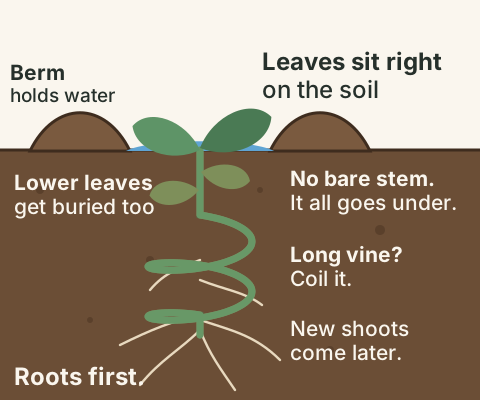
Bring the soil right up to the leaves, with no bare stem showing. It feels like you are hiding the plant. You are giving it what matters most: roots underground and time to settle in.
- Plant early in the rainy season. This matters most. Getting it in the ground with the first rains gives it the whole wet season to root.
- Dig a hole deep enough to bury the pot's soil and most of the stem.
- Fill soil up to the base of the leaves so one or two leaves sit on the surface and no stem shows. Firm it gently. The lower leaves go under too: the buried stem is where new roots form.
- Long vine? Coil it. Coil a long stem at the bottom of the hole, as many times as it takes to fit, and bury it all. More buried stem means more roots.
- Build a little berm. Push up a ring of soil around the plant so water pools there, then water it in.
- Watch those leaves. They are your health check. Green and firm means the roots are taking hold.
- Water it between rains. A good soak into the berm during dry spells helps it along until it settles in.
- Be patient. Pipevine puts its energy into roots first and emerges when it is ready, often in spring. Do not dig it up or uncover more leaves to check on it.
- Put it on the map. Choose I planted one on the pipevine map and tell us the date, where, and how many. A photo is enough: it fills in the place and the date.