
Our Flagship Program
Caterpillar Education Program
Bringing the life cycle of the California pipevine swallowtail into classrooms and communities: hands-on, habitat-first, and free.
What the program is
The Caterpillar Education Program is a hands-on, curriculum-linked experience that follows the California pipevine swallowtail (Battus philenor hirsuta) through its entire life cycle: from egg, to caterpillar, to chrysalis, to butterfly. Students don't just read about metamorphosis; they observe it, care for the host plants that make it possible, and take part in restoring the habitat this species depends on.
Because the pipevine swallowtail relies on a single native host plant, California pipevine (Aristolochia californica), the program ties classroom learning directly to real restoration work happening in our community.
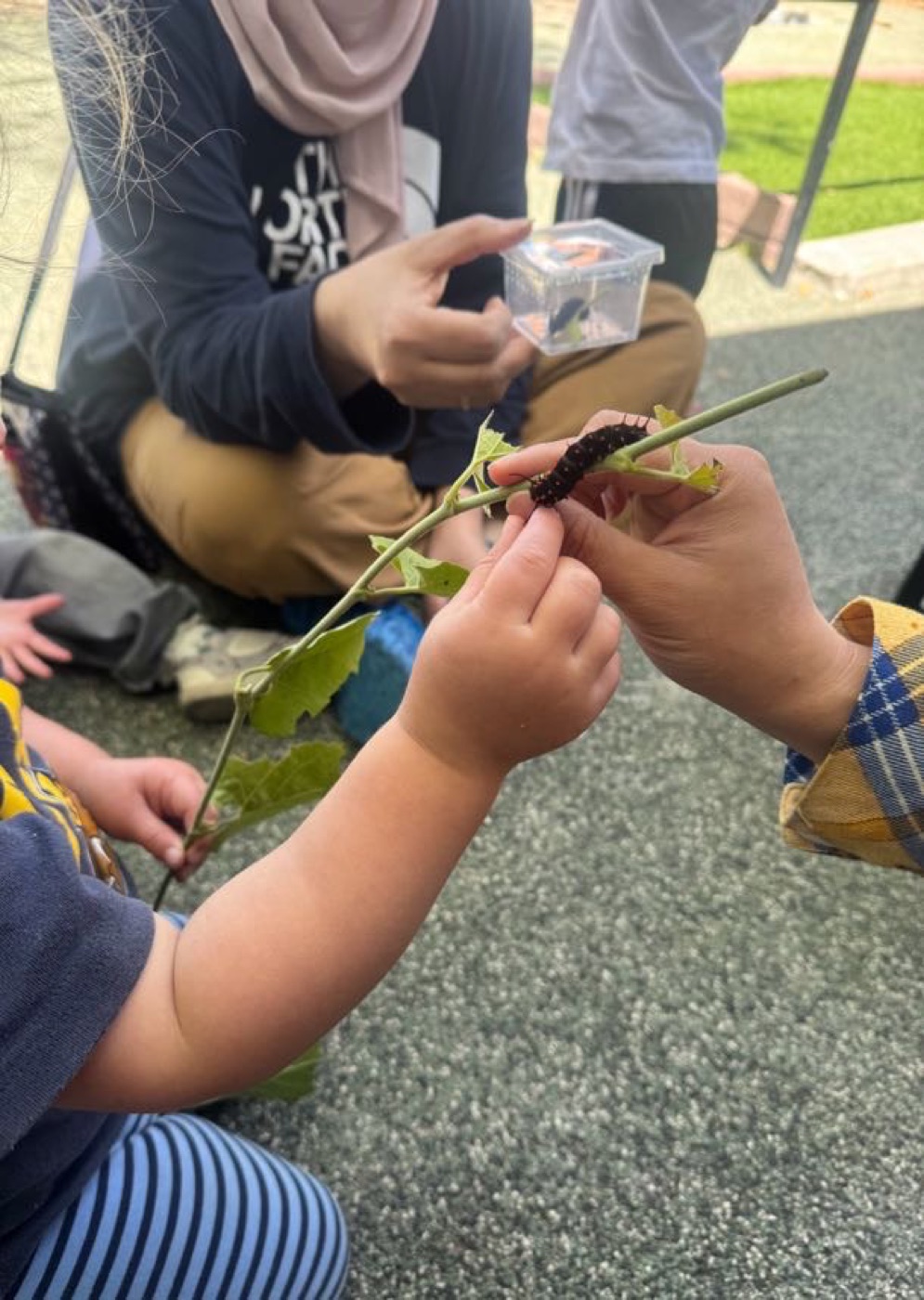
What students do
Every session is built around observation, care, and action.
Watch the full metamorphosis up close and learn how a single native plant sustains an entire species.
Propagate and tend California pipevine, the swallowtail's only host plant, from cutting to established vine.
Plant pipevine in the field and take part in real habitat restoration alongside our volunteers.
Become an advocate. Students carry the story home and into their communities.
For schools & educators
We bring the program to K–12 classrooms, after-school groups, scout troops, and community organizations throughout the East Bay. Sessions can be scheduled as a one-time visit or an ongoing partnership across a growing season.
- Aligned with California science standards on life cycles, ecosystems, and biodiversity
- All materials and host plants provided, at no cost to participating schools
- Indoor classroom sessions and outdoor field-restoration options
- Adaptable for elementary through high school age groups
The two-page handout we send out with every classroom visit sets out why native plants decide which birds and butterflies a place can have, walks through the life cycle, and gives the care notes on one sheet. Print as many as you need.
Our first collaboration: Clark Kerr Pre-school
We launched the program in June 2026 with the Early Childhood Education Program (ECEP) at UC Berkeley's Clark Kerr campus, and it is the model for what we hope to do with many more partners.
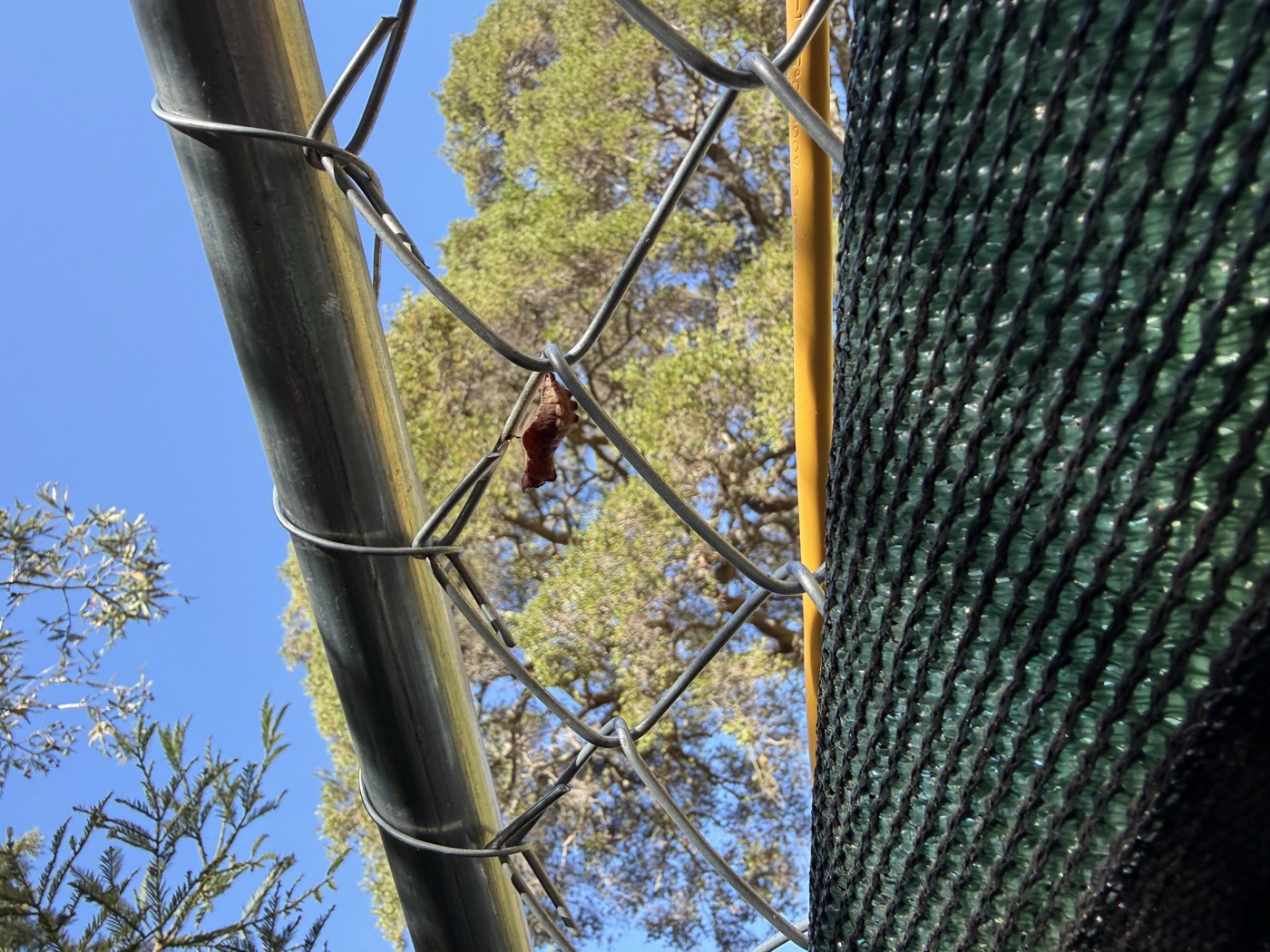
On June 8, we collected three caterpillars from the pipevine patch along Strawberry Creek and delivered them to the pre-school with a presentation for the children and staff. Over the following weeks the children watched them grow and pupate. In the staff's words, the captivating caterpillars brought the children and teachers so much joy, and a chrysalis was left behind to keep and watch emerge the following spring. The collaboration is ongoing: exactly the kind of local, hands-on partnership we would love to build with museums, libraries, and schools across the region.
Caring for your caterpillars
Every host receives simple guidance. The essentials:
- Overwintering pupae: many (but not all) chrysalises will overwinter and emerge the following spring. Keep them in a cool spot out of direct sun.
- Moisture: mist lightly with a spray bottle now and then so they do not dry out.
- Spring warm-up: in late winter or early spring, move them somewhere brighter and warmer to encourage emergence.
- Emergence and release: give the butterfly something to climb when it emerges, let it dry its wings for a few hours, then release. A dark red fluid (meconium) right after emergence is completely normal.
- A note on patience: caterpillars collected late in the season will usually form a chrysalis but not hatch until the following year, and pipevine swallowtail pupae can rest for more than one season before emerging, so don't give up on a quiet chrysalis.
All of this is on the back of our printed handout, alongside the life cycle, so it can go up on a wall next to the caterpillars rather than sit in somebody's inbox.
Bring the program to your community
Teachers, group leaders, and volunteers: we'd love to work with you.
Questions? Email hello@whrfund.org
Already growing pipevine?
An established vine is the scarcest thing in this program. Every caterpillar we place in a classroom has to eat California pipevine and nothing else. If you have one, you could be a source of cuttings, a home for reared caterpillars, or the person who shows a living vine to a class.
And if your vine has more caterpillars on it than it can feed, tell us that too.A vine stripped bare in July is a common sight and it usually means a dozen larvae will starve. Those are exactly the ones a classroom is waiting for. Same for spare foliage: a program without its own vine needs leaves for the whole larval stage, which is the part most likely to fail halfway. Tell us roughly what you have and when, and we will work out the rest.
Tell us about your vineMeet the species: the pipevine swallowtail and the vine it depends on, or learn about the campaign to Save the Pipevine.