
Wild Harvest
California Bay Laurel: how to find, identify, and harvest responsibly.
California bay laurel nuts
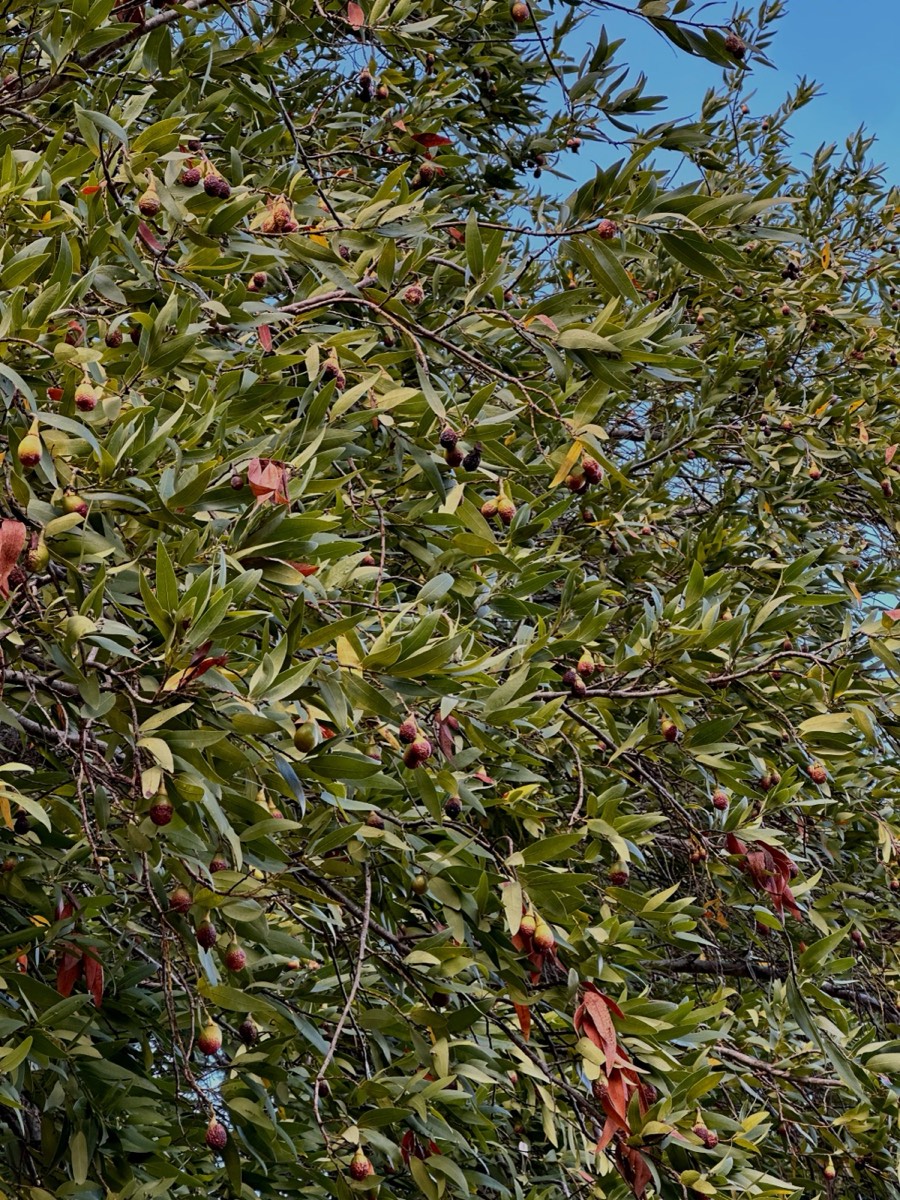
The California Bay Laurel (Umbellularia californica) is one of the most aromatic and useful trees in the California landscape. Its nuts, sometimes called pepperwoods, have been a staple food of Indigenous Californians for thousands of years.
Identifying the tree
California Bay Laurel is an evergreen tree or large shrub found throughout coastal California and the Sierra Nevada foothills. Look for:
- Lance-shaped, glossy dark-green leaves with an intensely aromatic, peppery-camphor scent when crushed
- Small yellow-green flowers in winter/spring
- Olive-like drupes (the "nuts") that ripen from green to yellow-purple in fall
Identifying the nuts
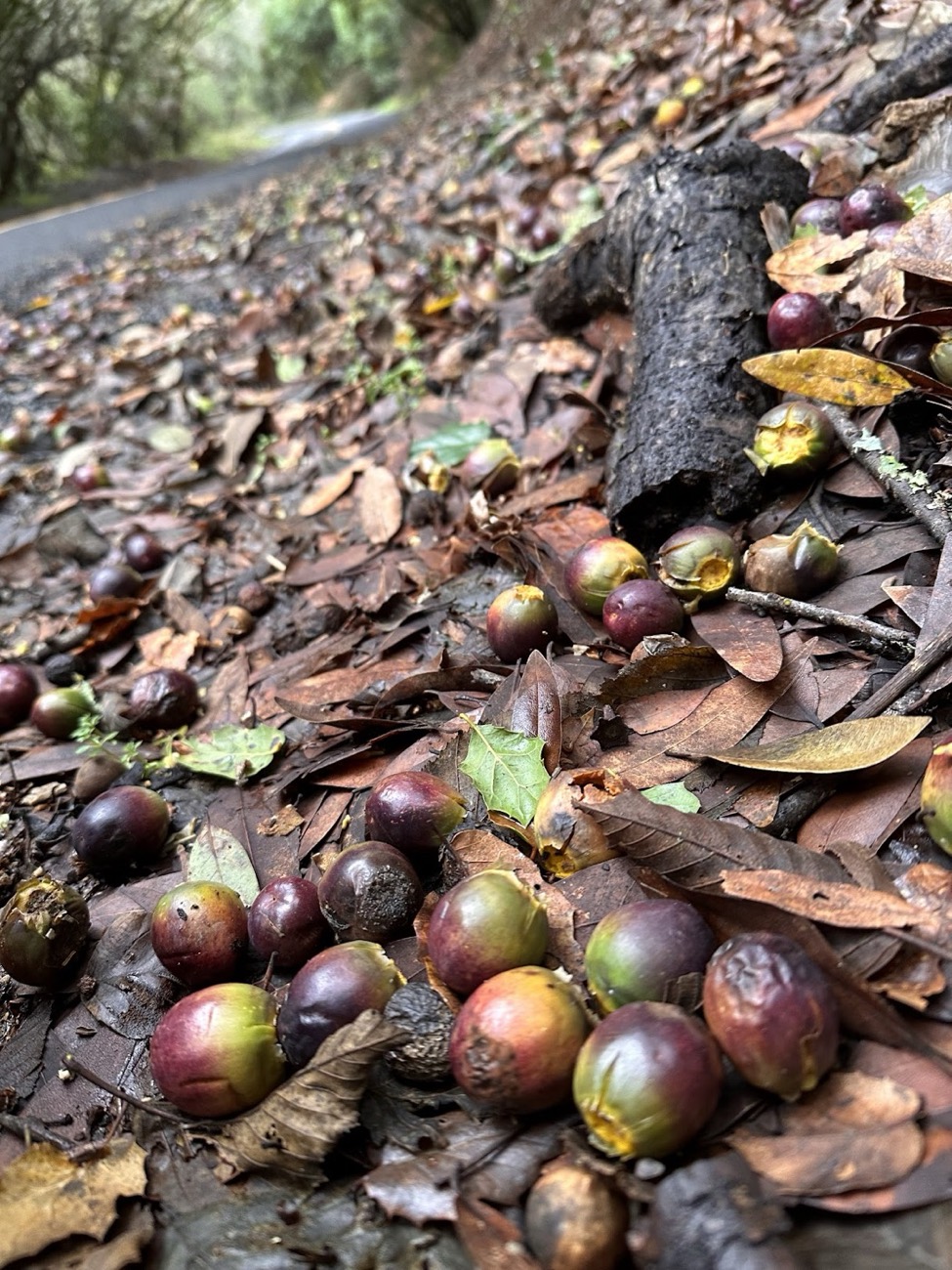
The fruit looks like a small olive, about 2–3 cm long, with a thin fleshy outer layer surrounding a hard shell with the nut inside. Look for:
- On branches: green fruits ripening to yellow, then purple
- On the ground: fallen fruits, often with the outer flesh smashed away
- The shell: a round, smooth, dark brown nut after the flesh is removed
Range
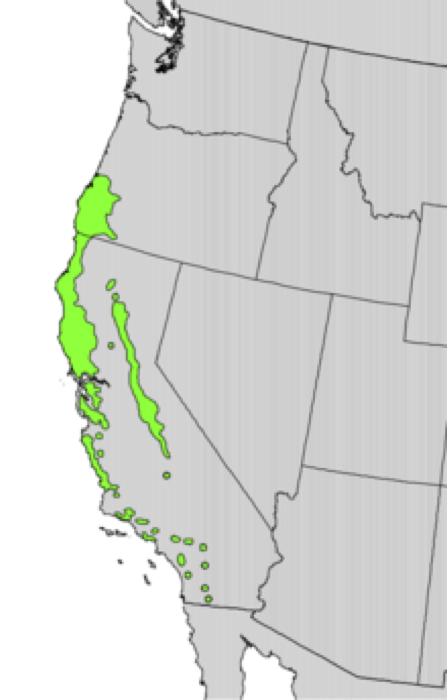
California Bay Laurel grows from southern Oregon to Baja California, primarily in:
- Coast ranges and foothills
- Mixed evergreen and oak woodland
- Riparian corridors and canyon bottoms
- Redwood forest understory
When to wild harvest
Nuts ripen from September through December, peaking in October–November. The best time to harvest is when nuts fall naturally from the tree, or when the outer flesh turns yellow-purple and separates easily.
What happens next
Raw Bay Laurel nuts contain compounds that must be neutralized through roasting. Traditional preparation:
- Remove the outer flesh
- Crack the shell to extract the kernel
- Roast the kernel in a pan or oven until fragrant and dark
- Grind into flour or eat whole
The roasted flavor is rich, complex, and coffee-like, and excellent as a flour or a caffeine-free drink.
Help us document bay laurel populations
We're mapping California Bay Laurel wild harvest sites to track populations, harvest pressure, and habitat health. Submit your sighting using the form below.
California bay laurel wild harvest documentation
Own land? There's another way to farm it
Everything above is about harvesting bay laurel well. If you own California land that has to be in agricultural production, the same trees may be able to do that job. A harvest is an agricultural use of a stand that is already there, which means production and restoration stop pulling against each other, and it is the alternative to clearing mature natives for a crop the ground was never suited to.
We cannot tell you how your county will see it, and would be guessing if we tried. We can look at what is growing on your land and tell you honestly whether there is something worth pursuing.